Alternative Squat Exercises by Goal
A good squat alternative is not just any leg exercise. It should match the training job of the squat as closely as your equipment and body allow. If your plan says back squat and you do not have a rack, the best swap might be a goblet squat, split squat, leg press, step-up, or bodyweight squat. The right choice depends on what you need most today: quads, glutes, single-leg strength, home equipment, a hotel gym, or a range of motion you can control.
That is the useful way to think about alternative squat exercises: keep the role, change the tool.
Best overall squat alternatives
If you want the closest practical swap for a barbell squat, start here.
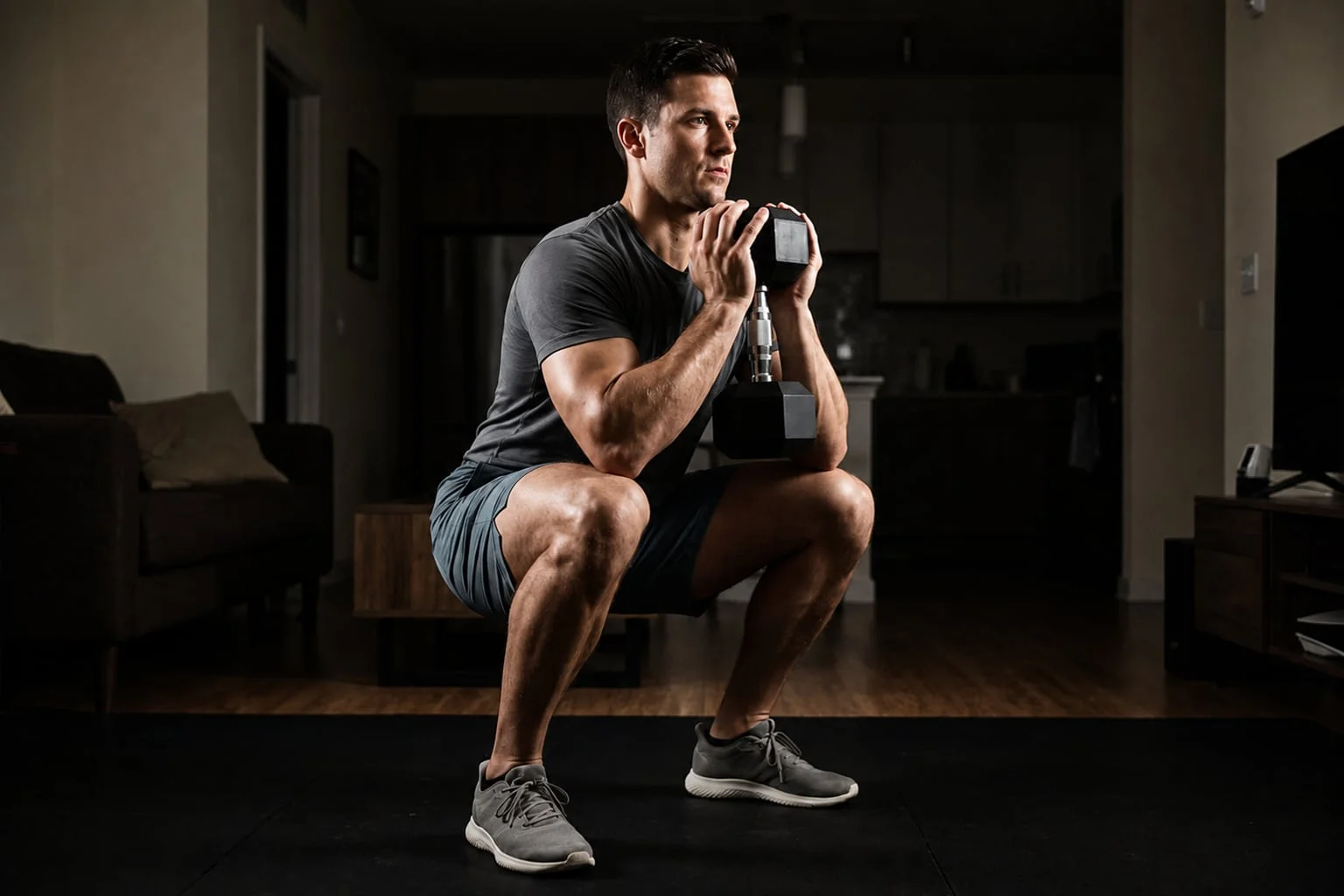
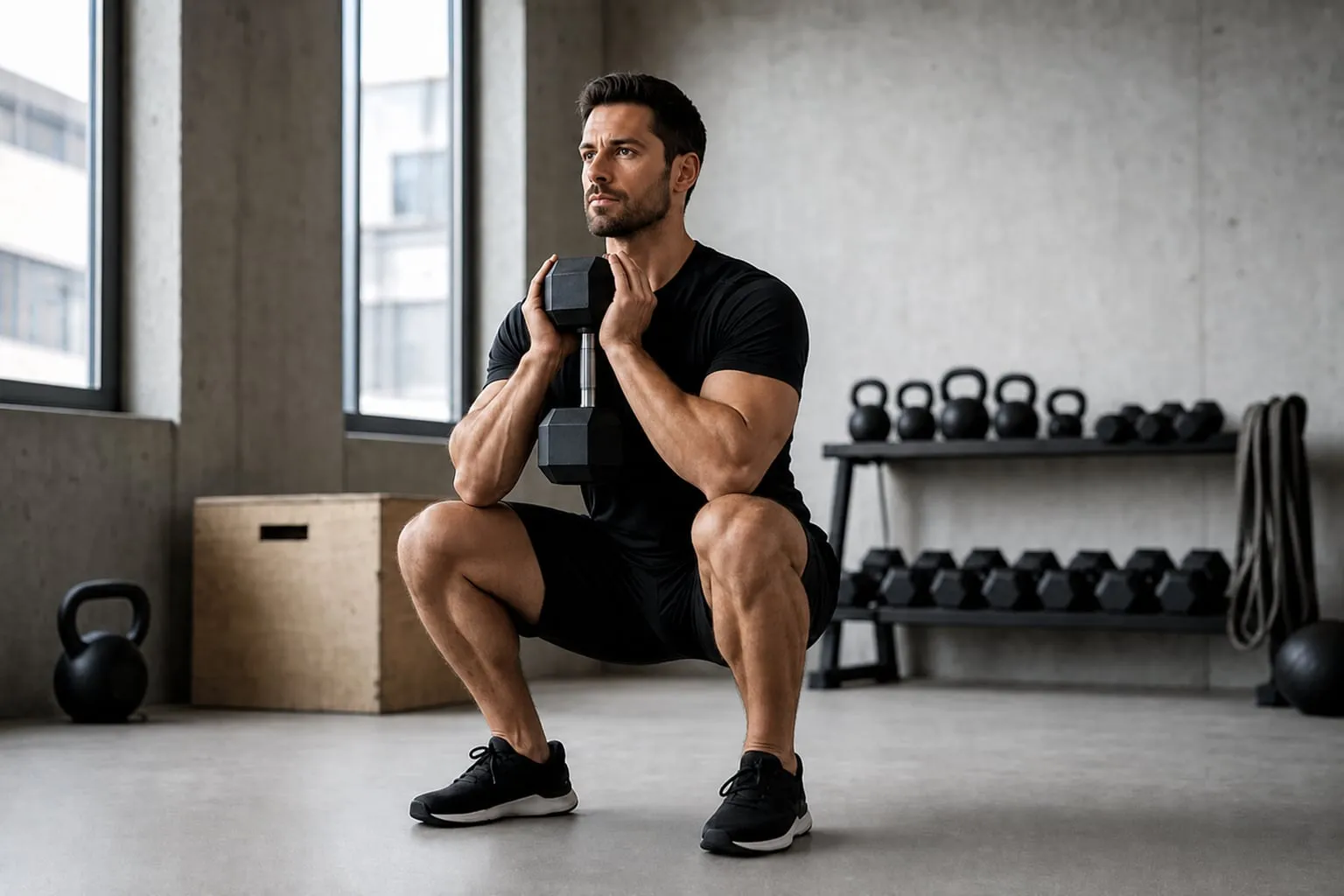
- Goblet squat. Hold one dumbbell or kettlebell at your chest. This is the simplest no-rack squat substitute because it keeps the movement upright, loads both legs, and works well in home gyms, hotel gyms, and crowded commercial gyms.
- Front squat. If you have a barbell but no back-squat setup, front squats keep the load in front of you and usually need less absolute weight to feel hard.
- Leg press. A machine leg press is not the same skill as a squat, but it can train heavy knee and hip extension when free weights are not available or when you want a stable setup.
- Bulgarian split squat. This is the highest-return dumbbell option for many lifters. It loads one leg at a time, so limited weights go further.
- Step-up. Step-ups are useful when you need a single-leg option that is easy to scale with box height, dumbbells, or slower reps.
- Bodyweight squat. The basic bodyweight version is the fallback when equipment is gone. Make it harder with pauses, slower lowering, higher reps, or single-leg progressions.
If your program also includes pull-ups and you are missing the right setup, use the same role-first logic from our pull-up alternatives guide.
No-barbell options when the rack is missing
No rack does not mean no squat pattern. It means you need a load you can get into position without the rack.
- Goblet squat for a direct, easy-to-teach replacement.
- Dumbbell front squat with two dumbbells at your shoulders when one goblet load is too light.
- Zercher squat from pins or blocks if your gym setup allows it and you already know the movement.
- Landmine squat when your gym has a landmine attachment or a secure barbell corner.
- Leg press or hack squat when machines are available and the goal is hard lower-body work, not practicing the exact barbell squat skill.
For most people training outside a full gym, the goblet squat and Bulgarian split squat cover the job best. One is bilateral and easy to set up; the other turns modest dumbbells into a serious leg exercise.
Dumbbell, home, and hotel-gym alternatives
Limited equipment changes the loading strategy. Instead of chasing the exact exercise name, use the hardest version your equipment supports.
If you have one dumbbell: goblet squat, suitcase squat, split squat, step-up, or tempo bodyweight squat.
If you have two dumbbells: dumbbell front squat, Bulgarian split squat, walking lunge, reverse lunge, or dumbbell step-up.
If you have a bench: rear-foot-elevated split squat, step-up, box squat to the bench, or supported single-leg squat progressions.
If you have bands: banded squat, Spanish squat setup, or band-assisted bodyweight squat. Bands are better as support or added tension than as a perfect barbell replacement, but they can keep the movement pattern in the session.
This is especially useful when you travel. Our hotel gym dumbbell workout shows how to cover squat, hinge, push, and pull patterns when the gym is basically dumbbells and a bench.
Knee-friendly or mobility-constrained options
This is not medical advice, and no article can tell you what is appropriate for an injury. If a movement causes sharp, worsening, or unusual pain, stop and get personal guidance. But if the issue is comfort, confidence, or range of motion, you can often choose a variation that is easier to control.
- Box squat to a bench limits depth and gives you a consistent target.
- Goblet squat to a box combines a counterweight with a controlled range.
- Step-up to a low box lets you choose the height and avoid forcing depth.
- Reverse lunge is often easier to control than a forward lunge because the front foot stays planted.
- Leg press with a comfortable range can load the legs without requiring the same balance or torso position as a free squat.
- Heel-elevated goblet squat may help if ankle mobility limits depth, as long as it feels controlled.
The point is not to hide from squatting forever. The point is to train the closest useful pattern today while respecting the range you can actually own.
How to choose a squat substitute by training goal
Use the goal of the original squat as the filter.
For quads: choose goblet squats, front squats, heel-elevated goblet squats, leg press, hack squat, or step-ups.
For glutes: choose Bulgarian split squats, reverse lunges, walking lunges, high step-ups, or a squat variation with a controlled deep range.
For single-leg strength: choose Bulgarian split squats, split squats, reverse lunges, lateral lunges, or step-ups.
For bodyweight training: choose bodyweight squats, pause squats, split squats, step-ups, wall sits, or assisted single-leg squat progressions.
For dumbbell-only training: choose goblet squats when setup needs to be simple, dumbbell front squats when you have two bells, and split squats when the weights are too light.
For machine-based training: choose leg press, hack squat, Smith machine squat, or cable-supported squat variations.
How to program the swap
Keep the original intent, then adjust the details.
- Match the role. A squat is usually a knee-dominant lower-body movement. Do not replace it with only a hip hinge unless the plan also covers quads elsewhere.
- Match the effort. If the original prescription was 3 sets of 6 heavy squats, a light set of 20 bodyweight squats is probably not the same stimulus. Use harder variations, slower reps, pauses, or single-leg work when load is limited.
- Use a sensible rep range. Goblet squats and split squats often fit well at 8-12 reps. Bodyweight options may need 12-20 reps. Heavy machines can stay closer to the original plan.
- Progress the substitute. Add reps, load, sets, range of motion, or control over time. The same progressive overload rules apply when the exercise changes.
- Record the reason. Write down why you swapped the lift: no rack, equipment taken, travel, comfort, or time. That makes the next adjustment easier.
Example: your plan says back squat, 3 sets of 5, but the squat rack is taken. A good swap could be goblet squat for 3 sets of 10 if the dumbbell is heavy enough, or Bulgarian split squat for 3 sets of 8 each side if the dumbbells are light.
Where Fit Trainer fits
Fit Trainer is built around the messy reality that a workout changes once you are in it. The app is a chat-based trainer that can use your goals, fitness level, equipment, location, session length, current workout state, and workout history to help adjust the session. If your plan says squat but you are in a hotel gym, missing a rack, or need a different movement today, Fit Trainer can suggest similar exercises and carry over replacement targets so the workout still has a plan.
For more context on the product, visit the home page, read the about page, or review pricing. The useful promise here is simple: swaps should keep training moving without turning every session into a research project.
FAQ
What is the closest alternative to a barbell back squat?
If you do not have a rack, the goblet squat is usually the closest simple free-weight alternative. If you have machines, the leg press or hack squat can provide a heavier lower-body stimulus, though they do not train the exact same skill.
Can lunges replace squats?
They can replace the lower-body role in many sessions, especially when equipment is limited. Lunges are single-leg exercises, so compare effort per leg rather than expecting the same load as a barbell squat.
Are bodyweight squats enough?
They can be enough for beginners, warmups, travel days, or high-rep fallback work. If bodyweight squats feel too easy, use pauses, slower reps, split squats, step-ups, or loaded variations.
What should I do if squats bother my knees?
Do not push through sharp or worsening pain. For general comfort or range-of-motion limits, try a controlled option such as a box squat, lower step-up, goblet squat to a box, or leg press in a comfortable range. Get personal guidance if pain keeps showing up.
How do I know whether a swap worked?
The substituted movement should train the same lower-body role, feel appropriately challenging, and leave you with a progression target for next time. If it was random, too easy, or impossible to repeat, choose a better match next session.