Hotel Gym Workouts: Train Well with Just Dumbbells
You know the room. Basement level, mirrored wall, one treadmill with a hand-written “out of order” note, a rack of dumbbells that stops at 22kg, and a bench that has seen better days. Your program says “Barbell squat 5×5,” and there is no barbell in sight.
Most people’s plans die here. Yours doesn’t have to.
A hotel gym with dumbbells and a bench can train every movement pattern in your program: squat, hinge, push, pull. The workout was never the problem. The problem is a plan that assumed your home gym and has no idea what to do without it. Fix the plan’s assumptions, and travel weeks become training weeks.
What’s the dumbbell-only session that covers everything?
Five movements, three sets each, 8–12 reps. Run them as straight sets, or pair 1+3 and 2+4 to finish faster:
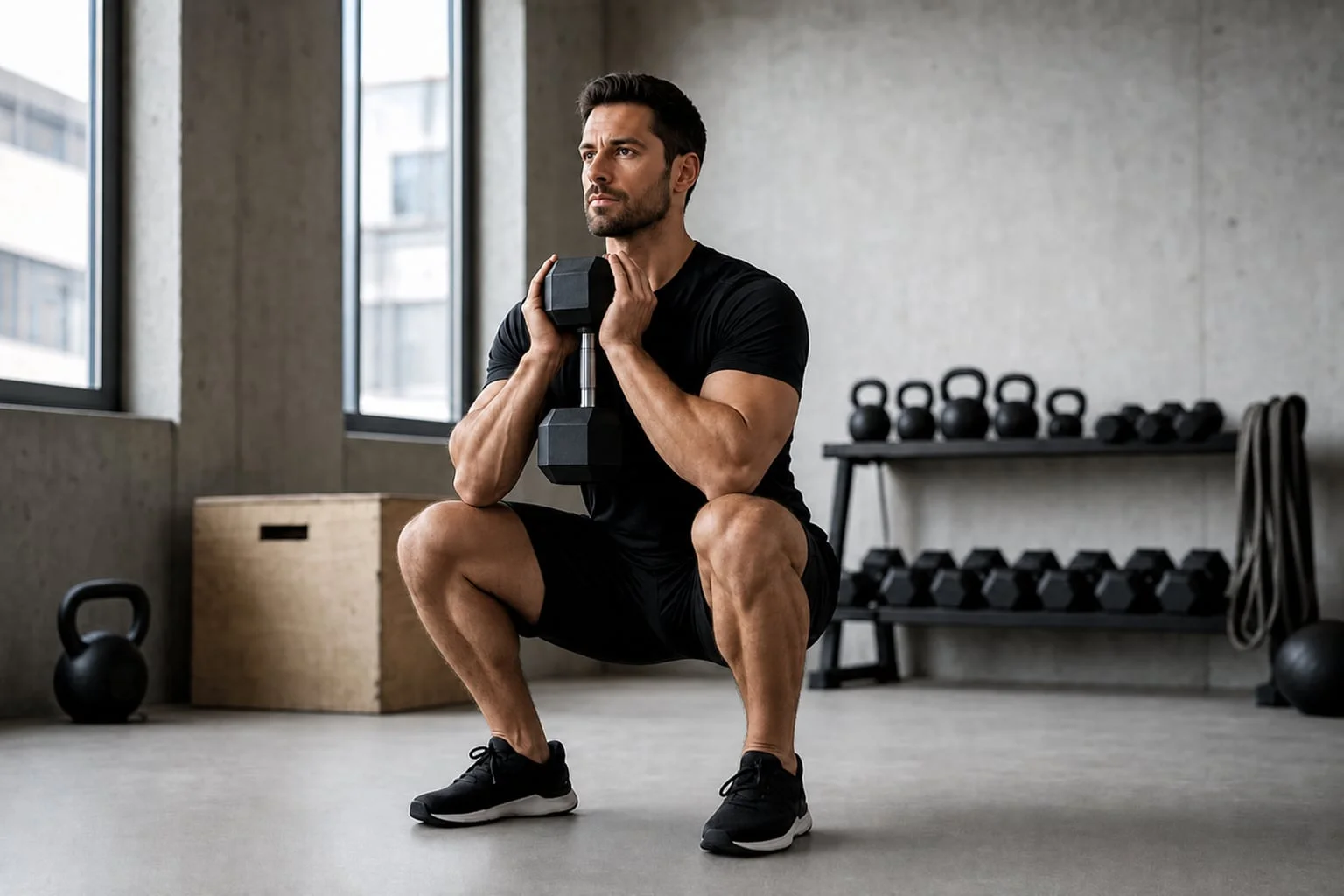
- Goblet squat. One dumbbell, held at your chest.
- Flat dumbbell press. On the bench, or on the floor if there’s no bench.
- One-arm dumbbell row. Knee on the bench, heaviest bell available.
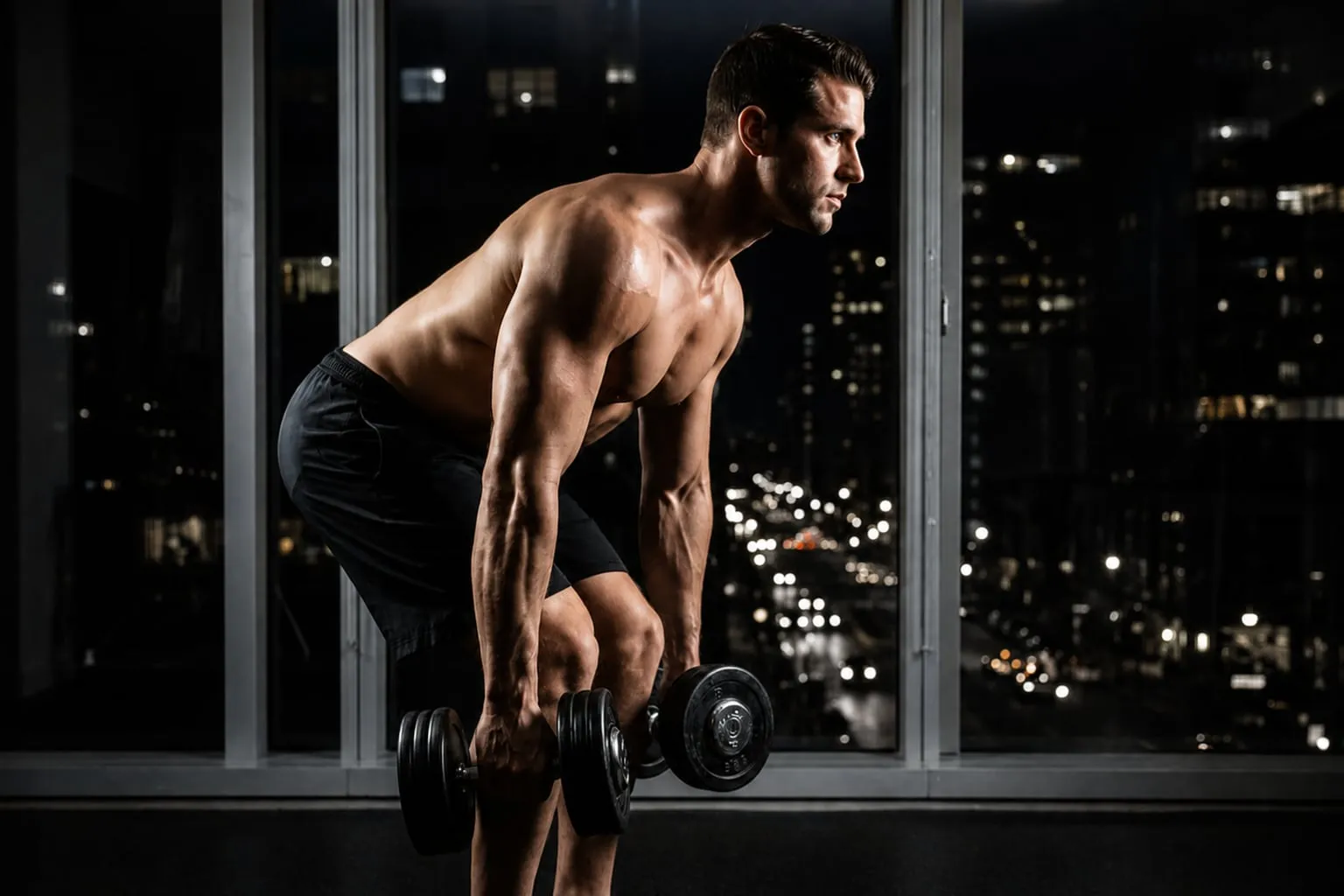
- Dumbbell Romanian deadlift. Both bells, hips back, hamstrings loaded.
- Finisher (optional). Lateral raises, curls, or ten minutes of incline walking if the treadmill recovered.
The whole session takes about forty minutes, covers every pattern, and means you actually trained on a work trip.
The dumbbells are too light. Does it still work?
This is the classic hotel-gym objection, and the answer is yes, with one adjustment: make light weight feel heavy. Your muscles respond to effort, not to the number printed on the bell.
- Slow the lowering phase. Take three full seconds to lower every rep and even an 18kg bell starts to feel heavy.
- Add reps. The 8–12 range stretches to 15–20 when the load is light. The last three reps should still be hard.
- Shrink the rest. 45 seconds instead of two minutes changes everything about how a “light” set feels.
A set is productive when the final reps are hard, and that’s available at any weight a hotel stocks.
What do I swap when equipment is missing?
Memorize your substitutes before the trip, not mid-workout:
- No bench press: floor press, or push-ups with your laptop bag on your back.
- No squat rack: goblet squats, rear-foot-elevated split squats, or another squat alternative that matches the goal.
- No pull-up bar: one-arm rows, or any of these pull-up alternatives.
- No equipment at all: a resistance band weighs nothing and covers rows, presses, and curls from a door anchor. Pack one.
Down to twenty minutes between landing and dinner? The fallback circuit runs perfectly in a hotel gym.
The real cost of travel isn’t the missed gym
It’s what happens after. You get home, the spreadsheet says week 6, your body says week 4½, and nothing lines up. So you “restart,” and restarting is usually where momentum ends for good.
The travel week has to be part of the plan: logged, counted, and folded into your progression, not a hole the plan pretends didn’t happen. If you run your own programming, write the bridge yourself. Keep loads where they were before the trip for one session, then resume the climb. There’s more on building plans that survive real life in our strength training planner guide.
Travel is just one version of a week that won’t sit still. The same logic applies to a workout app for a busy schedule, which rebuilds the session around whatever time and equipment you have on any given day.
And if you’d rather it just be handled, tell Fit Trainer you’re in a hotel gym with dumbbells to 22kg. It rebuilds tonight’s session on the spot, same goal and available equipment, then threads the whole trip into your progression. Your plan can travel with you.