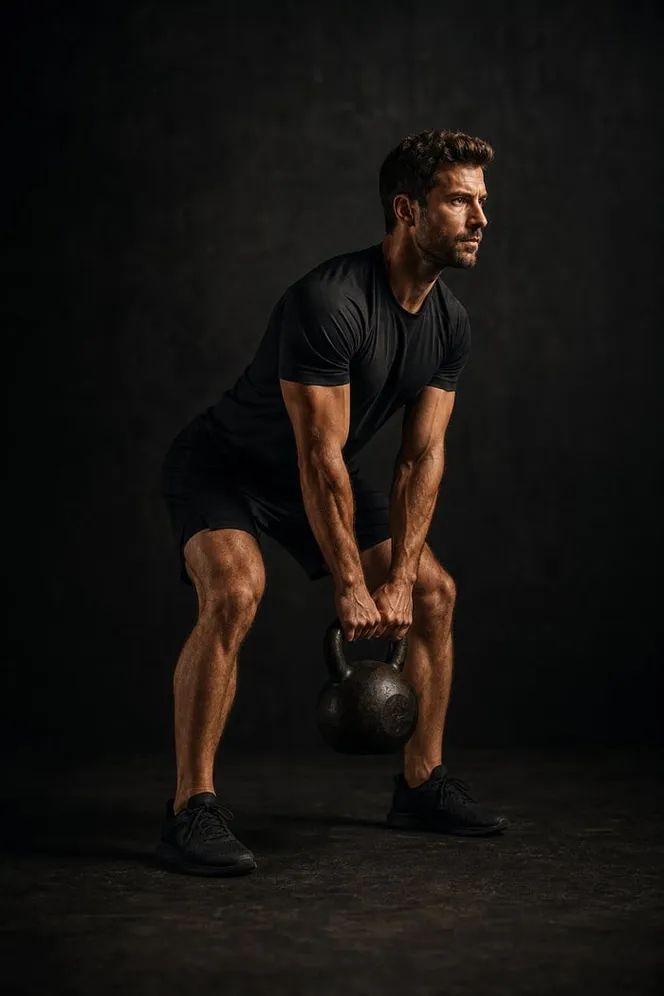
Beginner Dumbbell Workout at Home Guide
A beginner dumbbell workout at home should train your whole body 2-3 times per week with a squat or hinge, a push, a pull, a carry or core hold, and an easy finisher. Start with 2 sets of 8-12 clean reps, keep 2-3 reps in reserve, and add weight or reps only after the movement feels controlled. You do not need a gym, but you do need a repeatable plan and a way to track progress.
This guide is for the person with a few dumbbells, no gym access, and no appetite for a chaotic video playlist. It also works if you have lost weight through cardio and now want to start strength training, or if your first home workout felt discouraging because the pace was too high. The goal is not to crush the first session. The goal is to finish it, log it, and know exactly what to repeat next time.
What do you need before you start?
You need a clear patch of floor, one or two dumbbells, and a way to write down what you did. A bench helps, but it is optional. A sturdy chair, the edge of a firm sofa, or the floor can cover most beginner needs if you move carefully and avoid unstable surfaces.
Pick weights that make the last few reps feel focused without turning sloppy. If you own only one pair of 10 lb dumbbells, use them. If they feel too light, you can slow the lowering phase, add a pause, or add reps later. If they feel too heavy, use one dumbbell held with both hands or switch to bodyweight until the pattern feels stable.
This is a beginner home strength training routine with dumbbells, not a test of how much equipment you can collect. The structure matters more than the rack.
What warmup should you do first?
Warm up for five to seven minutes. You are preparing the joints and rehearsing the patterns, not trying to get tired before the workout starts.
- March in place or walk briskly for 60 seconds.
- Do 8 bodyweight squats, stopping where your heels stay down.
- Do 8 hip hinges with hands on hips, pushing the hips back and keeping the spine long.
- Do 8 wall push-ups or incline push-ups.
- Do 8 slow shoulder blade squeezes, then 8 arm circles each direction.
- Practice the first exercise with no weight, then with the lightest dumbbell.
If a joint feels sharp or pinchy during the warmup, change the movement before the working sets. Mild stiffness is normal. Pain that changes your form is a signal to stop and choose an easier option.
What is the beginner dumbbell workout routine?
Use this dumbbell workout routine two or three days per week, with at least one rest day between sessions. Monday and Thursday works. Monday, Wednesday, and Friday also works if soreness stays mild.
Keep the first week simple: 2 sets per exercise, 8-12 clean reps, and 60-90 seconds of rest. The 2026 American College of Sports Medicine position stand found that strength improved more with at least two sessions a week, and that equipment type did not consistently change results, so dumbbells at home are a fair way to train (ACSM, 2026). The finisher should feel easy enough that you could talk in short sentences.
| Exercise | Sets and reps | What it trains | Beginner cue |
|---|---|---|---|
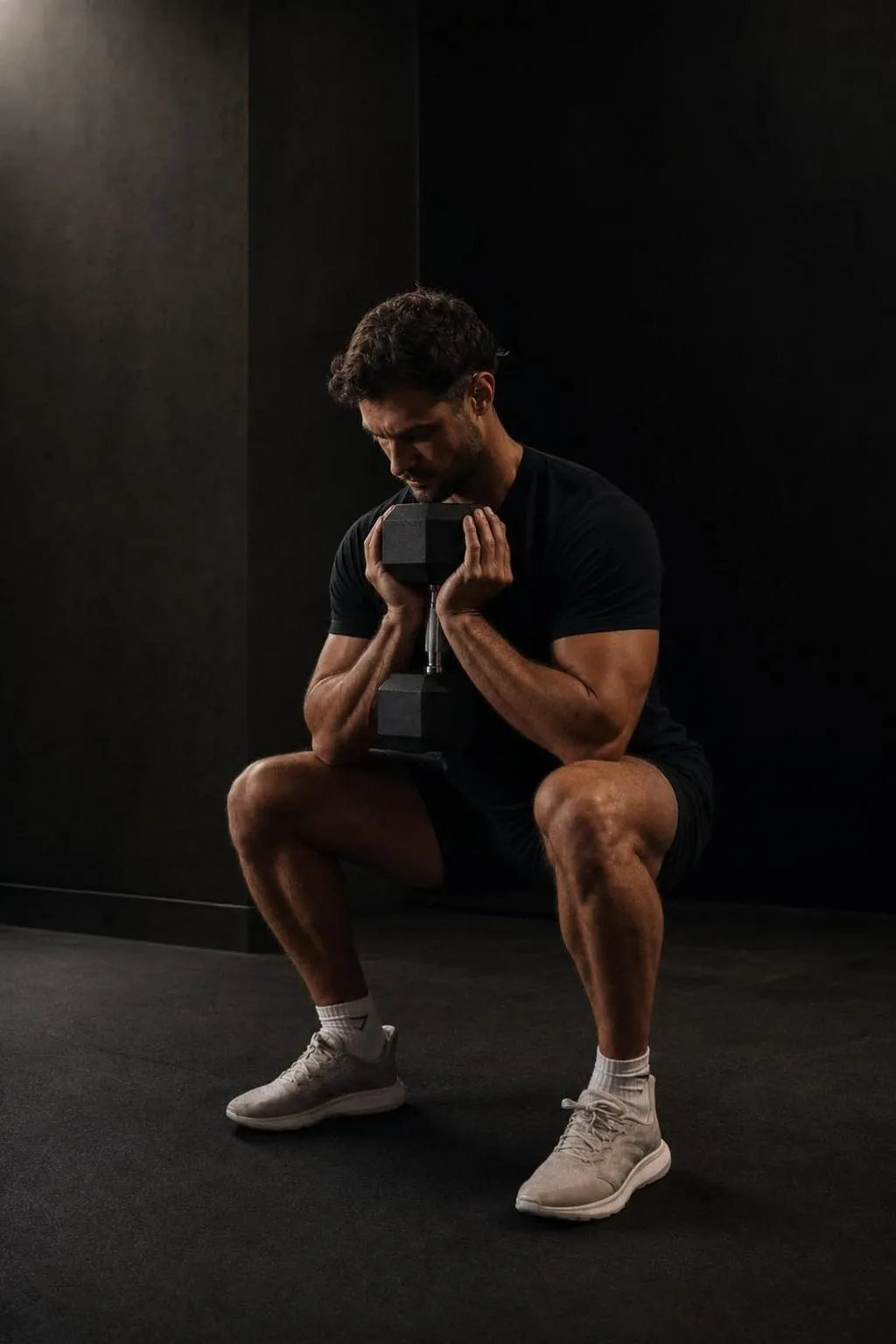
| Goblet squat | 2 x 8-12 | Quads, glutes, core | Hold one dumbbell upright at your chest. Sit between your feet, keep heels down, and stop before your back rounds. |
| Dumbbell Romanian deadlift | 2 x 8-12 | Hamstrings, glutes, back position | Push your hips back, keep the dumbbells close to your legs, and stand tall when you feel the hamstrings load. |
| Dumbbell floor press | 2 x 8-12 | Chest, shoulders, triceps | Lie on the floor, elbows about 45 degrees from your ribs, and press until arms are straight without shrugging. |
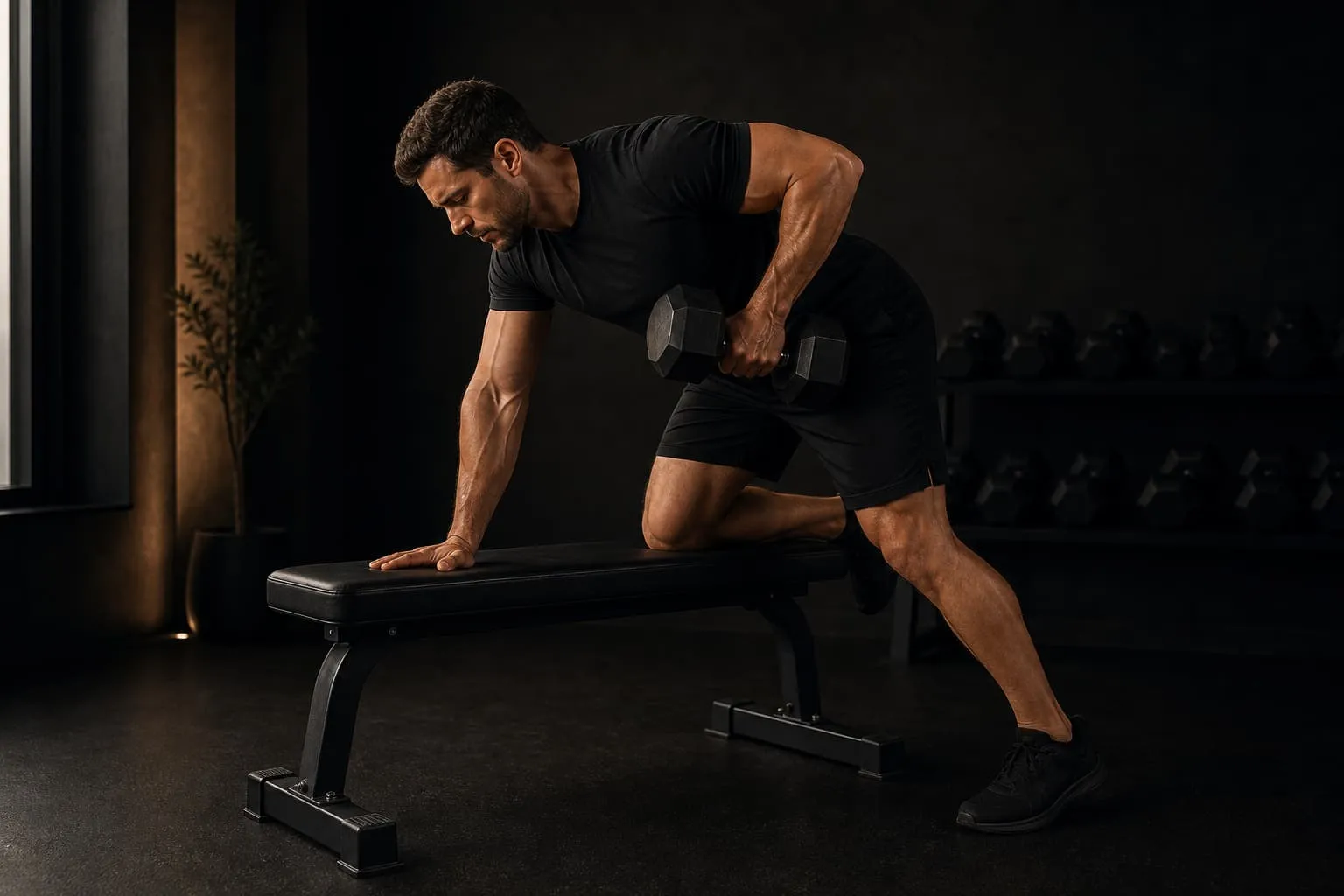
| One-arm dumbbell row | 2 x 8-12 each side | Upper back, lats, grip | Brace one hand on a bench or chair, keep your spine neutral, and pull the dumbbell toward your ribs. |
| Suitcase carry or hold | 2 x 20-40 seconds each side | Core, grip, posture | Hold one dumbbell at your side and walk slowly. If space is tight, stand still and resist leaning. |
| Easy finisher | 4-6 minutes | Conditioning without burnout | Alternate step-ups, marching, or light farmer carries. Keep the pace calm enough to recover quickly. |
For the first two weeks, repeat the same routine. Repetition is useful because it teaches you what controlled reps feel like. A new workout every day makes soreness and progress harder to read.
How hard should each set feel?
Stop most sets with 2-3 reps left in reserve. That means you could do two or three more clean reps if you had to, but you choose to stop before form changes. This matters more than the number on the dumbbell.
Use three checks. First, the last rep should look like the first rep. Second, you should feel the target muscles working more than your joints. Third, you should recover enough to repeat the next set with similar control. If any of those fail, reduce the weight, shorten the range, or use the easier substitution.
This is the simplest way to turn a beginner workout plan into training you can keep. You are not avoiding effort. You are saving the harder effort for after the movements are learned.
What if you have limited equipment?
Limited equipment is normal at home. The answer is to keep the movement pattern and adjust the version.
| Problem | Use this substitution | Why it works |
|---|---|---|
| No bench | Floor press instead of bench press. Row with one hand braced on a sturdy chair or table edge. | The floor and chair still let you train pushing and pulling without needing a gym bench. |
| Only one dumbbell | Goblet squat, one-dumbbell Romanian deadlift, one-arm row, suitcase carry, and dead bug. | Unilateral work lets one weight train both sides while your core works harder to stay level. |
| Dumbbells feel too light | Lower for three seconds, pause at the hardest point, add reps up to 15, or reduce rest. | Light weights become useful when the set is controlled and the final reps still require focus. |
| Dumbbells feel too heavy | Use one dumbbell with both hands, reduce the range, or swap to bodyweight for that exercise. | The movement pattern stays in the plan while your form catches up. |
| No room to walk | Suitcase hold, front-rack hold, plank, or dead bug. | You still train bracing and control without pacing across the room. |
If you are travelling and your setup is a hotel bench plus mismatched dumbbells, use the same movement logic in the hotel gym dumbbell workout. This home guide is the stable base. The travel version is for weeks when the room changes.
How should the first four weeks progress?
Progression should be boring enough to follow. Start by repeating the same workout, then add one small layer when your log says you are ready.
| Week | Goal | How to progress |
|---|---|---|
| Week 1 | Learn the routine | Do 2 sessions. Use 2 sets of 8 reps if you are unsure. Write down weight, reps, and notes on form. |
| Week 2 | Make it repeatable | Keep 2 sessions, or add a third only if soreness is mild. Aim for 9-12 reps with the same clean form. |
| Week 3 | Add a little work | Add one set to the goblet squat and row, or add 1-2 reps per set. Choose one change, not both. |
| Week 4 | Add load where earned | If you hit 12 clean reps on every set with 2-3 reps in reserve, use the next dumbbell up next time. Hold steady anywhere form was shaky. |
For a deeper look at the first month, read Beginner Strength Training: Your First Four Weeks. The short version is that week one teaches the pattern, week two builds trust, and weeks three and four add small amounts of work.
If you want the plan adapted to your dumbbells, time, soreness, and missed days, Fit Trainer can do that from a chat. Start with the beginner workout app walkthrough, or use the AI workout plan generator page if you want to see how equipment-aware plans are built.
What form cautions matter most?
Keep these rules close for the first month.
- Squats: Keep both heels down and let the knees track over the toes. Stop the set if your lower back rounds at the bottom.
- Hinges: Move from the hips, not the waist. The dumbbells should stay close to your legs.
- Presses: Keep your ribs down and elbows slightly tucked. If your shoulders pinch, switch to a lighter floor press or incline push-up.
- Rows: Brace before you pull. If your torso twists to move the weight, the dumbbell is too heavy.
- Carries: Walk slowly and stay tall. If the weight pulls you sideways, shorten the time or use a lighter dumbbell.
Do not chase soreness. Mild stiffness is fine. Soreness that changes stairs, sleep, or your next session means the last workout was too much for your current base.
Is this different for women?
A beginner workout routine for women does not need a separate list of “toning” exercises. It needs the same beginner structure: squat or hinge, push, pull, carry or core, and a steady way to progress. The starting weights may differ from person to person, but the method does not.
If you are coming from cardio, the first few sessions may feel strange because strength training asks you to slow down and repeat the same patterns. That is normal. Keep the weights conservative, use the log, and let progress come from better reps before heavier dumbbells.
How do you keep this going after week four?
After week four, keep the same basic template and progress one variable at a time. Add reps before weight. Add weight before adding new exercises. Add a third day only if recovery stays predictable.
The best beginner dumbbell workout at home is the one you can recognize next week. When the plan keeps changing, you cannot tell whether you got stronger or just did something different. Keep the structure steady, track the work, and let the numbers move slowly.
FAQ
How many days a week should a beginner dumbbell workout at home be?
Start with two days per week if you are new, sore, or unsure about form. Move to three days per week once the same workout feels repeatable and you recover well between sessions.
Can I do a beginner dumbbell workout at home with no gym?
Yes. A beginner dumbbell workout at home no gym setup can train your legs, chest, back, shoulders, grip, and core with one or two dumbbells, a clear floor, and a chair or bench for support.
What dumbbell weight should a beginner start with?
Choose a weight you can lift for 8-12 clean reps while keeping 2-3 reps in reserve. If your form changes, your joints complain, or you cannot control the lowering phase, the weight is too heavy for today.
Is this a beginner workout routine for women too?
Yes. A beginner workout routine for women uses the same basic movement patterns: squat or hinge, push, pull, carry, and core. Start with the weights you can control and progress from your own logged reps.
Sources
- Currier BS, D’Souza AC, Singh MAF, et al. American College of Sports Medicine position stand. Resistance training prescription for muscle function, hypertrophy, and physical performance in healthy adults: an overview of reviews. Medicine & Science in Sports & Exercise, 2026;58(4):851–872. This updates the 2009 ACSM position stand.